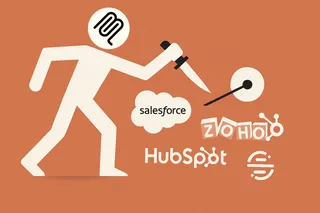
Microsoft’s support for MCP signals the beginning of a new era where agents replace traditional SaaS apps. Here’s why CRMs, CDPs, and integration tools should be worried.
The MCP Announcement
When Microsoft announced support for the Model Context Protocol (MCP), it wasn’t just another integration announcement. It was a signal that the largest enterprise software company sees a future where AI agents interact directly with tools and data, bypassing traditional application interfaces.
What MCP Enables
MCP creates a standardized way for AI agents to:
- Access tools - Execute actions across different systems through a unified protocol
- Retrieve context - Pull relevant information from multiple sources
- Maintain state - Remember context across interactions
This means an AI agent can orchestrate work across your entire tool stack without requiring custom integrations for each application.
The SaaS Vulnerability
Traditional SaaS applications are built around a core assumption: humans interact with software through designed interfaces. Menus, buttons, dashboards, workflows—all crafted to help humans navigate complexity.
But agents don’t need designed interfaces. They need:
- APIs to access data and execute actions
- Context to understand what’s relevant
- Tools to perform specific operations
The carefully crafted UI becomes irrelevant.
Categories at Risk
Several SaaS categories look particularly vulnerable:
CRMs
If an agent can access customer data, update records, and trigger workflows directly, why navigate a complex CRM interface? The CRM becomes a database with an expensive UI.
Integration Platforms
iPaaS tools exist to connect systems that don’t talk to each other. MCP standardizes that connection at the protocol level. The custom connector marketplace shrinks.
Customer Data Platforms
CDPs aggregate customer data for humans to query and segment. Agents can query raw data sources directly and synthesize insights on demand.
The Timeline
This isn’t an overnight extinction. The transition will take years:
- Now - Early adopters experiment with MCP for internal tooling
- Near-term - Enterprise pilots with agent-first workflows
- Medium-term - New products designed agent-first, legacy products add MCP support
- Long-term - Categories restructure around agent interaction models
Implications for Builders
If you’re building SaaS:
- Expose your value as APIs and MCP servers - Your UI may become a secondary interface
- Focus on unique data and capabilities - Commodity features get absorbed by agent orchestration
- Consider agent-first design - What if your first user is an AI, not a human?
The Opportunity
Extinction events create ecological niches. The SaaS disruption creates opportunities for:
- Agent orchestration platforms - Tools that help enterprises deploy and manage AI agents
- Specialized MCP servers - Deep integrations with complex enterprise systems
- Trust and governance layers - Systems that ensure agents operate within policy bounds
The Bottom Line
Microsoft’s MCP support accelerates a shift that was already underway. The question isn’t whether AI agents will change how we interact with enterprise software—it’s how quickly the transition happens and who captures the value in the new landscape.